

HIKMICRO Stellar SQ35 Thermal Scope
BEST THERMAL SCOPE FOR HUNTING – EXTREME DETECTION & PRECISION TARGETING BUY NOW AND RECEIVE: A FREE HUNTING KNIFE (VALUED UP TO $120) FR...
View full detailsTrading : 7am to 5pm (Mon-Sun)
Call Us : (03) 7071 0777
Email Us : sales@primalhunter.com.au
NEED HELP?
Hours: 7am-5pm (Mon-Sun)
Ph: (03) 7071 0777
E:sales@primalhunter.com.au
No torch. No IR. Just raw thermal power.
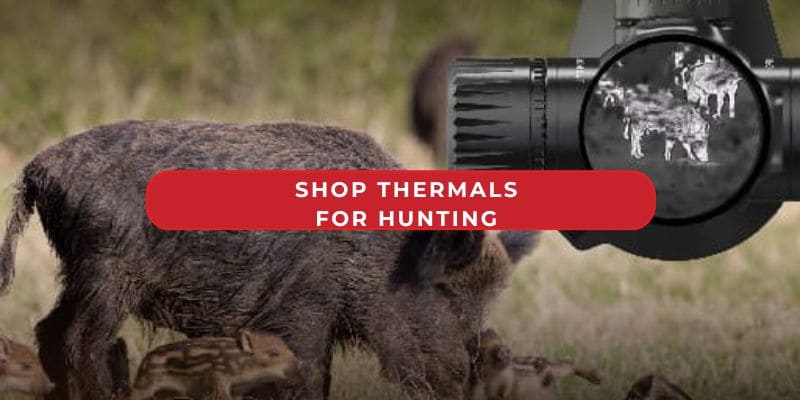
Whether it’s pigs in the paddock or foxes in the field, our thermal scopes light them up when nothing else can.
Rugged. Reliable. Ready.
Gear up with our thermal scopes and own the night.
If you're just dipping your toes into thermal technology, let us help you cut through the noise.
Give us a call to discuss if thermal scopes are the right fit for you, or check out our FAQs section at the bottom of the page!

Save $-5,499.00
BEST THERMAL SCOPE FOR HUNTING – EXTREME DETECTION & PRECISION TARGETING BUY NOW AND RECEIVE: A FREE HUNTING KNIFE (VALUED UP TO $120) FR...
View full details
Save $-6,299.00
THERMAL RIFLESCOPE FOR FIELD & FOREST – HIGH PERFORMANCE NIGHT HUNTING BUY NOW AND RECEIVE A FREE HIKMICRO PICATINNY RAIL MOUNT FOR PANTHER...
View full detailsSHOP BY CONCERN
To zero in a thermal scope, mount it securely on your rifle and choose a suitable thermal target such as a heat pack, hand warmer, or purpose made thermal zeroing target placed at your desired zeroing distance (commonly 50 or 100 yards). Fire a group of shots, then use the scope’s windage and elevation adjustments to move the reticle to the center of the impact group while keeping the rifle steady or using a thermal scope with a one shot zero feature. Repeat the process until the point of impact matches the point of aim. Always ensure the rifle is stable, ideally using a bench rest or bipod, and allow the rifle barrel to cool between shot groups for consistent results.
It is important to keep in mind, that there is no one size fits all when it comes to best thermal scopes. A $10,000 thermal scope with a high end thermal sensor (but high starting base mag and narrow FOV) may not suit someone who is hunting in the environments with high shrub density. Instead, you might require a thermal scope with a lower starting base mage and wider FOV. These are just some of the considerations that need to be made before deciding which thermal vision scope is best for you. If you're after a recommendation, feel free to contact us for a obligation free chat to discuss what is best for you!
LRF on a thermal scope stands for Laser Range Finder. It’s a built in feature that uses a laser to accurately measure the distance between you and your target, often up to several hundred metres. This is especially useful for Aussie hunters shooting at long range in low light, where judging distance by eye can be unreliable. An LRF equipped thermal scope helps improve shot placement and reduces guesswork making it easier to take ethical, precise shots even in complete darkness.
A thermal scope detects infrared radiation (heat) emitted by objects, using a sensor called a microbolometer to capture temperature differences rather than visible light. It converts this heat data into a visual image, displaying warmer objects in brighter tones (like white or red) and cooler areas in darker tones (like black or blue). This allows users to see clearly in total darkness, smoke, or fog, making thermal scopes useful for hunting, surveillance, and military operations.